Best Hair Salon in Aligarh: How to Choose the Right Salon for Your Hair and Beauty Needs
Healthy, shiny, and manageable hair is something everyone desires. However, regular exposure to pollution, dust, sunlight, heat styling, chemical treatments, and improper hair care can gradually damage hair quality. Common problems such as dryness, frizz, split ends, hair breakage, and an itchy scalp often indicate that your hair needs extra care.
One popular salon treatment that addresses several of these concerns is a hair spa. Hair spa treatments are designed to nourish the hair, improve softness, support scalp care, and restore moisture. But is hair spa really good for your hair? Are there any side effects? How frequently should you get a hair spa?
In this comprehensive guide, we will explore the benefits of hair spa, possible side effects, different types of hair spa treatments, and professional hair care recommendations to help you make an informed decision.
What Is a Hair Spa?
A hair spa is a professional hair care treatment that focuses on improving hair texture, hydration, softness, and overall scalp condition. It generally involves cleansing, conditioning, nourishing hair masks, and gentle scalp massage.
Unlike regular hair conditioning, which primarily focuses on the outer hair strands, a hair spa provides a more comprehensive hair care experience.
A typical salon hair spa treatment includes:
- Hair and scalp analysis: A professional examines your hair texture, scalp condition, dryness, and specific hair concerns.
- Hair cleansing: A suitable shampoo removes dirt, excess oil, and product buildup.
- Hair mask application: A nourishing hair spa cream or mask is applied according to your hair requirements.
- Scalp massage: Gentle massage helps distribute the product and provides a relaxing experience.
- Steam treatment: Depending on the treatment, gentle steam may be used to support conditioning.
- Rinsing and conditioning: The product is washed away, and a suitable conditioner may be applied.
- Hair styling: Hair is dried and styled according to your preference.
The products and techniques used may differ depending on the salon, hair spa brand, and treatment selected.
10 Amazing Benefits of Hair Spa for Healthy Hair
A professionally selected hair spa can improve the appearance and manageability of your hair. Here are some of its most important benefits.
1. Provides Deep Hair Conditioning
One of the biggest benefits of hair spa is improved hair conditioning.
Hair exposed to frequent washing, pollution, heat styling, and chemical treatments can become dry and rough. Hair spa masks contain conditioning ingredients that help coat the hair strands, reduce friction, and improve softness.
Regular conditioning can make hair easier to comb and manage.
Best for: Dry, rough, frizzy, and chemically treated hair.
2. Helps Reduce Frizz and Improve Hair Smoothness
Frizzy hair is often caused by dryness, humidity, and damage to the hair’s protective outer layer.
Hair spa treatments containing conditioning agents, natural oils, and moisturising ingredients can help improve hair smoothness.
They also help reduce tangling, making hair more manageable.
However, hair spa is not a permanent hair-smoothing treatment. Its results generally last for a limited period and depend on your hair condition and aftercare routine.
Best for: Frizzy, unmanageable, and rough hair.
3. Improves Hair Shine and Appearance
Dull hair can make your overall appearance look less healthy.
A nourishing hair spa can smooth the hair surface and improve how it reflects light. This can make your hair look shinier, healthier, and more polished.
Ingredients such as argan oil, coconut oil, shea butter, and conditioning agents are commonly used in hair care formulations to improve hair appearance.
Best for: Dull, lifeless, and dry hair.
4. Helps Improve Hair Manageability
If your hair frequently gets tangled or becomes difficult to comb, a hair spa may help.
Conditioning treatments reduce friction between hair strands, making detangling easier.
This can also help reduce mechanical hair breakage caused by aggressive brushing and combing.
Best for: Long, thick, curly, and tangled hair.
5. Supports Scalp Care
A healthy-looking scalp is an important part of an effective hair care routine.
A hair spa may include gentle cleansing and scalp massage, which can help remove surface impurities and distribute natural oils.
However, hair spa treatments are not medical treatments for dandruff, psoriasis, fungal infections, or other scalp disorders.
If you experience persistent itching, redness, or excessive flaking, consult a dermatologist.
6. Helps Reduce Hair Breakage
Hair breakage is different from hair fall.
Breakage occurs when the hair shaft becomes weak and snaps due to dryness, friction, excessive heat styling, or chemical damage.
Hair spa treatments provide conditioning that can improve flexibility and reduce friction between strands.
As a result, hair may become easier to manage, potentially reducing breakage during brushing.
Important: Hair spa cannot repair severely damaged hair permanently or prevent hair loss caused by hormonal, nutritional, or medical conditions.
7. Provides Relaxation and Stress Relief
A hair spa is not only a beauty treatment but also a relaxing salon experience.
Gentle scalp massage and a comfortable treatment environment can help you feel relaxed.
Many people enjoy hair spa treatments because they combine professional hair care with personal relaxation time.
8. Helps Maintain Chemically Treated Hair
Hair colouring, bleaching, rebonding, smoothening, and other chemical services can affect hair strength and moisture balance.
A suitable conditioning hair spa can help improve softness and manageability after such treatments.
However, the treatment should be selected according to your hair’s chemical history.
Always inform your stylist about previous chemical services before choosing a hair spa.
9. Makes Hair Easier to Style
Conditioned hair is generally easier to comb, blow-dry, and style.
By reducing tangling and improving smoothness, hair spa treatments can make everyday styling more convenient.
This is particularly helpful for people who regularly create professional, party, or occasion hairstyles.
10. Improves the Overall Hair Care Experience
A hair spa offers an opportunity to evaluate your hair condition and follow a structured conditioning routine.
With professional product selection and suitable home care, you can maintain better-looking and more manageable hair.
What Are the Side Effects of Hair Spa?
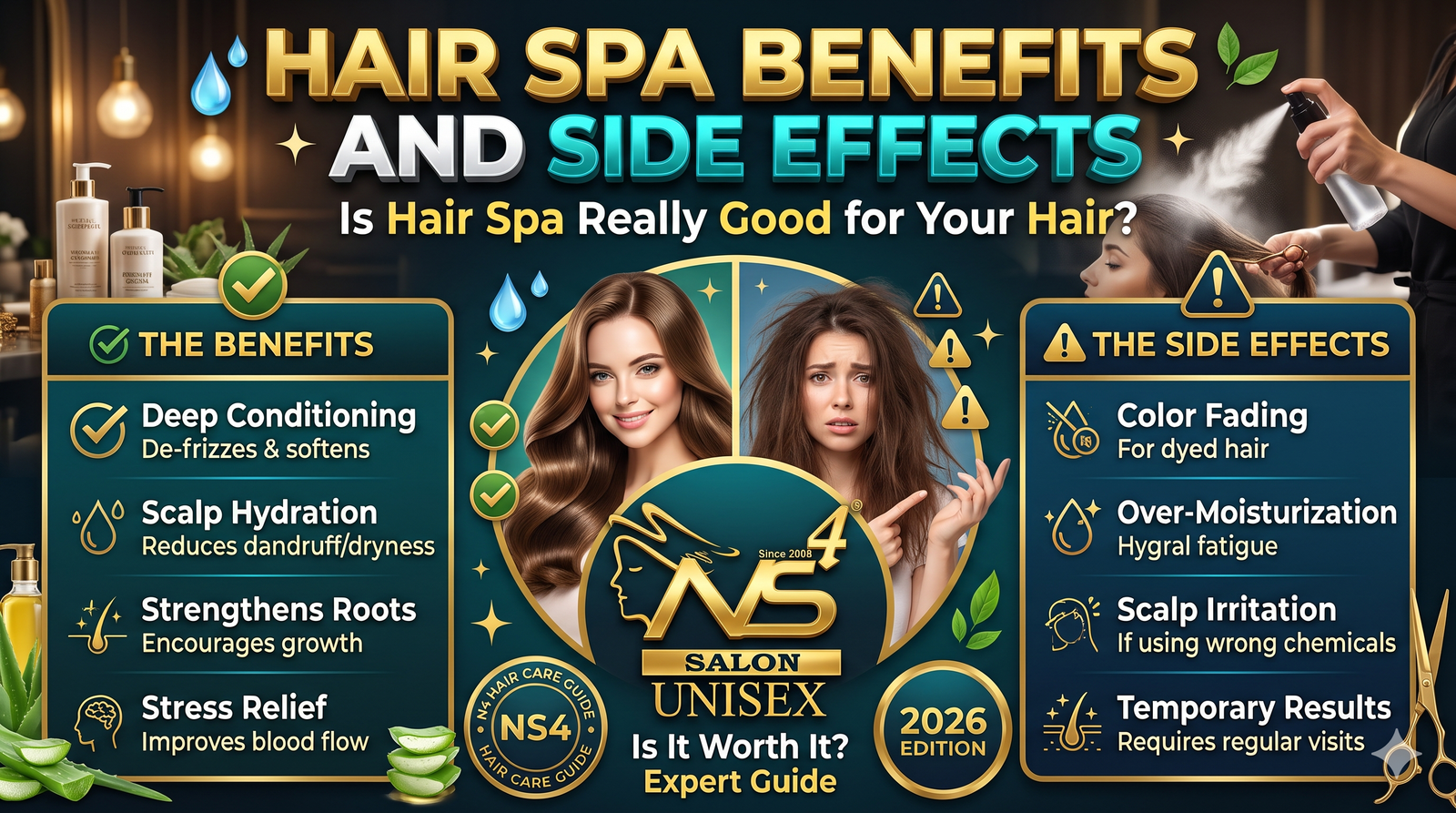
Although hair spa is generally suitable for many people, it is not completely free from potential side effects.
The results depend on the ingredients, treatment technique, scalp condition, and individual sensitivity.
Here are some possible side effects to understand before booking your appointment.
1. Allergic Reactions
Some hair spa products contain fragrances, preservatives, botanical extracts, and other ingredients that may cause allergic reactions in sensitive individuals.
Possible symptoms include:
- Scalp itching.
- Redness.
- Burning sensations.
- Skin irritation.
- Rashes.
Always check the ingredient list and consider a patch test if you have a history of product allergies.
2. Excessive Oiliness
People with naturally oily scalps may experience greasy hair if heavy conditioning products are applied directly to the scalp.
Using products specifically designed for oily hair can help avoid unnecessary buildup.
3. Product Buildup on the Scalp
Applying excessive hair masks or conditioners to the scalp may leave product residue.
This can make hair feel heavy and greasy.
Proper cleansing and suitable product application are important for maintaining scalp hygiene.
4. Temporary Hair Weakness Due to Improper Treatment
Excessive heat, rough handling, aggressive massage, and unsuitable products can contribute to hair damage.
Professional application and controlled steam settings are important, especially for chemically treated or fragile hair.
5. Not Suitable for Every Scalp Condition
If you have an active scalp infection, open wounds, severe irritation, or an inflammatory scalp condition, certain hair spa treatments may worsen discomfort.
It is better to consult a dermatologist before undergoing salon treatments in such situations.
6. Hair Spa May Not Control Hair Fall
One common misconception is that hair spa completely stops hair fall.
Hair fall can be caused by several factors, including:
- Nutritional deficiencies.
- Hormonal changes.
- Thyroid disorders.
- Genetic hair loss.
- Stress and illness.
- Scalp conditions.
Hair spa mainly improves hair conditioning and appearance. It does not treat the underlying medical causes of hair loss.
Different Types of Hair Spa Treatments
Different hair types require different conditioning approaches. Choosing the right treatment can help you achieve better results.
GoRonto | Salon Appointment Booking & Home Beauty Services | 100% Seat Ready
Komal Beauty Studio | Where Beauty Meets Relaxation
The Step-by-Step Protocol for: a Scalp Detox Facial – Your Client’s Ti – Pure Spa Direct
1. Hydrating Hair Spa
A hydrating hair spa focuses on improving moisture and softness.
It is generally suitable for dry, rough, and dehydrated hair.
Common ingredients may include glycerin, aloe vera, hyaluronic acid, and conditioning agents.
2. Keratin Hair Spa
Keratin-based conditioning treatments are designed to improve hair smoothness and manageability.
They may help reduce frizz and improve the appearance of damaged hair.
However, a keratin hair spa is different from professional keratin straightening or smoothing treatments.
3. Anti-Dandruff Scalp Treatment
These treatments focus on scalp cleansing and comfort.
Some formulations contain ingredients designed to help manage visible flakes.
Persistent dandruff may require dermatologist-recommended treatment rather than a regular salon hair spa.
4. Damage Repair Hair Spa
Damage repair treatments are designed for hair affected by colouring, bleaching, heat styling, and chemical processing.
They generally focus on conditioning, reducing friction, and improving hair manageability.
5. Protein Hair Spa
Protein-based hair treatments are designed to condition hair and improve its feel.
They may be useful for certain types of damaged hair, but excessive protein treatments can make some hair types feel stiff or rough.
Professional assessment is recommended before selecting a protein-based treatment.
6. Colour Protection Hair Spa
Colour protection treatments are designed for coloured hair.
They focus on conditioning and helping maintain the appearance of coloured hair.
Use colour-safe shampoos and conditioners to support your salon treatment results.
Hair Spa According to Different Hair Types
Choosing a treatment according to your hair type is essential.
| Hair Type | Recommended Hair Spa |
|---|---|
| Dry Hair | Hydrating Hair Spa |
| Frizzy Hair | Smoothing Hair Spa |
| Oily Scalp | Lightweight Conditioning Treatment |
| Chemically Treated Hair | Damage Repair Hair Spa |
| Coloured Hair | Colour Protection Hair Spa |
| Rough Hair | Nourishing Hair Spa |
| Curly Hair | Moisture-Rich Hair Spa |
| Fine Hair | Lightweight Conditioning Treatment |
A professional hairstylist can recommend the most appropriate treatment after examining your hair and scalp.
How Often Should You Get a Hair Spa?
The ideal frequency depends on your hair condition, lifestyle, scalp type, and the products used.
Here is a general guideline:
| Hair Condition | Suggested Frequency |
|---|---|
| Normal Hair | Every 4–6 Weeks |
| Dry Hair | Every 3–4 Weeks |
| Damaged Hair | Every 3–4 Weeks, Depending on Assessment |
| Frizzy Hair | Every 3–5 Weeks |
| Oily Scalp | As Needed, With Suitable Products |
| Chemically Treated Hair | According to Professional Advice |
Getting a hair spa too frequently does not necessarily provide better results.
A balanced hair care routine with suitable shampoo, conditioner, and occasional deep conditioning is usually more beneficial.
Hair Spa vs Regular Hair Conditioning: What’s the Difference?
Many people confuse regular conditioning with hair spa treatments. Although both improve hair softness, there are some differences.
| Hair Spa | Regular Conditioning |
|---|---|
| Professional salon treatment | Usually performed at home |
| May include cleansing and scalp massage | Mainly focuses on hair strands |
| Uses specialised hair masks | Uses regular conditioner |
| Takes more time | Takes only a few minutes |
| Provides a complete conditioning experience | Provides routine conditioning |
| Results may last longer depending on products and care | Benefits generally last until the next few washes |
Both treatments can be useful when selected according to your hair requirements.
Is Hair Spa Good for Hair Fall?
This is one of the most frequently asked questions about hair spa treatments.
The answer depends on the reason behind your hair fall.
Hair spa can help improve conditioning and reduce hair breakage caused by dryness and tangling. This may make hair appear healthier and reduce breakage during combing.
However, it cannot treat hair loss caused by:
- Androgenetic alopecia.
- Hormonal imbalance.
- Iron deficiency.
- Thyroid problems.
- Telogen effluvium.
- Certain medical conditions.
If you are experiencing excessive or persistent hair fall, consult a dermatologist to identify the actual cause.
Who Should Avoid Hair Spa Treatments?
Hair spa is suitable for many people, but some individuals should take additional precautions.
Avoid or postpone salon treatments if you have:
- Active scalp infections.
- Open wounds or cuts on the scalp.
- Severe scalp irritation.
- Known allergies to treatment ingredients.
- Significant scalp inflammation.
People with extremely damaged or chemically overprocessed hair should also consult an experienced hairstylist before selecting a treatment.
How to Maintain Hair After a Hair Spa
Getting a professional hair spa is only one part of maintaining healthy-looking hair. Your daily hair care routine also matters.
Follow these simple tips after your treatment.
1. Use a Suitable Shampoo
Choose a shampoo according to your scalp type and hair condition.
If you have coloured or chemically treated hair, consider a suitable colour-safe shampoo.
2. Avoid Excessive Heat Styling
Frequent use of straighteners, curling irons, and high-temperature blow dryers can contribute to dryness and damage.
Use a heat protectant before styling.
3. Apply Conditioner Regularly
Conditioner helps improve softness and reduce friction between hair strands.
Apply it mainly to the mid-lengths and ends.
4. Avoid Aggressive Hair Brushing
Wet hair is more vulnerable to stretching and breakage.
Use a wide-tooth comb and gently detangle your hair.
5. Protect Hair From Sun Exposure
Excessive sunlight and environmental exposure can affect hair appearance and colour.
Use suitable protective products and cover your hair when spending extended periods outdoors.
6. Maintain a Balanced Diet
Healthy hair depends on overall nutritional health.
Include adequate protein, iron-rich foods, vitamins, and essential nutrients in your diet.
If you suspect a nutritional deficiency, seek professional medical advice instead of taking supplements without guidance.
Why Choose a Professional Salon for Hair Spa?
A professional salon offers more than just product application.
Experienced hairstylists can assess your hair condition, recommend suitable products, and customise the treatment according to your requirements.
At NS4 Salon, professional hair care services focus on improving hair appearance, softness, smoothness, and manageability.
Whether your hair is dry, frizzy, rough, dull, or chemically treated, selecting the right treatment is important for achieving satisfactory results.
Hyaluronic Splash Tassel: Tratamiento Hidratante Profesional con Ácido Hialurónico | Pelumarkt
How Professional Hair Treatment Salon Restores Damaged Hair – Monay Hair Cryotherapy
Komal Beauty Studio | Where Beauty Meets Relaxation
11
A personalised hair spa experience can help you enjoy:
- Professional hair and scalp assessment.
- Suitable hair spa product recommendations.
- Expert product application.
- Relaxing scalp massage.
- Hair conditioning and nourishment.
- Professional aftercare recommendations.
Visit NS4 Salon and consult a professional hairstylist to understand which hair spa treatment is appropriate for your hair type.
Frequently Asked Questions About Hair Spa
1. Is hair spa really good for your hair?
Yes, hair spa can be beneficial for improving hair softness, conditioning, shine, and manageability. It can also help reduce friction-related hair breakage. However, results depend on your hair condition and the treatment selected.
2. Does hair spa stop hair fall permanently?
No. Hair spa does not permanently stop hair fall. It may help reduce hair breakage caused by dryness and tangling, but medical hair loss requires proper diagnosis and treatment.
3. Can we do hair spa every week?
Weekly hair spa treatments are generally unnecessary for most people. Excessive conditioning may leave some hair types greasy or weighed down. A frequency of approximately 3–6 weeks is a reasonable starting point, depending on individual needs.
4. Does hair spa increase hair growth?
Hair spa is not scientifically established as a treatment for increasing hair growth. It mainly improves hair conditioning and appearance.
5. Can hair spa remove dandruff?
A regular hair spa cannot reliably treat dandruff. Certain scalp treatments may help with cleansing, but persistent dandruff often requires appropriate anti-dandruff products or medical treatment.
6. Is hair spa suitable for coloured hair?
Yes, many hair spa treatments are suitable for coloured hair. However, choose colour-safe formulations and inform your stylist about your previous chemical treatments.
7. How long do hair spa results last?
Results vary depending on the treatment, hair condition, products, and home care routine. The softness and smoothness may gradually reduce after subsequent washes.
8. Is hair spa better than oiling?
Both serve different purposes. Oiling can help lubricate hair strands and reduce friction, while hair spa treatments provide more comprehensive conditioning. The best option depends on your hair requirements.
9. Can hair spa damage your hair?
Hair spa is generally safe when performed correctly. However, unsuitable products, allergic reactions, excessive heat, and improper techniques can cause irritation or damage.
10. What is the best hair spa for dry and damaged hair?
Hydrating and damage-repair hair spa treatments are common options for dry and damaged hair. The right choice depends on the level of damage, hair texture, and chemical history.
Conclusion: Is Hair Spa Worth It?
A hair spa can be a valuable addition to your hair care routine when chosen according to your hair type and specific concerns.
From improving hair softness and shine to reducing frizz and making hair easier to manage, professional hair spa treatments offer several cosmetic benefits.
However, it is equally important to understand their limitations. Hair spa cannot permanently repair severely damaged hair, stop genetic hair loss, or treat medical scalp conditions.
The best results come from combining professional salon treatments with regular home care, suitable hair products, and a healthy lifestyle.
Give your hair the care it deserves with a personalised hair spa treatment at NS4 Salon. Healthy-looking, smooth, and manageable hair starts with the right hair care routine!